Posts

Showing posts with the label authority of Scripture

God With Us as Guide and Liberator (An Advent sermon from Matthew 1:18-25)

They shall call him Emmanuel, which means, God with us. Christians of different traditions may utilize different images and words to talk about how Jesus incarnates the Divine, but all of us see in Jesus a representative of God with us. When I look at Jesus I see a special revelation of the goodness and grace of God, whose life and teachings serve as a guide for my life and as a means of liberation. Let’s talk first about God as Emmanuel being our guide. Joseph is not a dominant figure in the birth stories, but here, in the way he responds to Mary’s pregnancy Joseph functions as a kind of model for all of us.   What do I mean? Consider how Joseph responded when he discovered that the wife he was pledged too was pregnant, and of course he assumed she was pregnant by another man. He assumed that she had been unfaithful. The text says that Joseph “being a righteous man (or just man) and unwilling to expose her to public disgrace, planned to dismiss her quietly.” Matthew says...
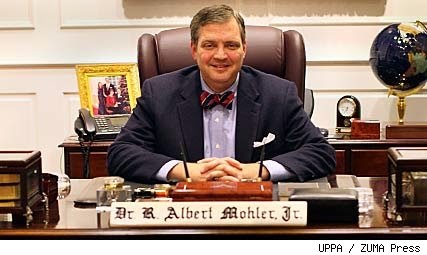
Dr. Albert Mohler versus musician Michael Gungor: Who is on the verge of theological peril?

Image
Dove Award-winning Christian musician Michael Gungor has been taking a hit from some of his evangelical fans for saying that he has no more ability to believe that Adam and Eve were literal persons who lived 6,000 years ago or that “a flood covered all the highest mountains of the world only 4,000 years ago” than he is able “to believe in Santa Clause or to not believe in gravity.” In a recent podcast Dr. Albert Mohler, president of Southern Baptist’s flagship seminary in Louisville , claims that Gungor “is shifting into theological reverse, moving right back to the last decades of the 19 th century.” According to Mohler, Gungor’s ideas are the result of Protestant liberalism, “which also came over to the United States [from Germany ], infecting many denominations and seminaries.” I mean, really, Dr. Mohler? When is learning how to think a disease? What Dr. Mohler doesn’t say is that practically all mainline biblical scholarship rejects his inerrantist view of the Bible...

Interpreting Matthew 5:17-20 (one of the most difficult passages in the Gospels)

It is difficult to know how much of this passage, if any, originated with Jesus and how much is to be attributed to the author/redactor of the Gospel. Either way, it’s in our sacred text and we are faced with the task of making sense of these words from Matthew’s Jesus. What is Matthew’s Jesus saying? The most obvious reading is that Matthew’s Jesus takes a strict view of the Jewish law. But how then can this text be reconciled with a text like Matt. 12:1-8, where Jesus clearly disregards Sabbath law, offering as justification an example from the life of David where David clearly violates the Torah requirements regarding the sacred bread in the holy place? The tensions/contradictions these differing responses to the Jewish law create are not easily resolved. What may have prompted the writer in 5:17-20 to be so insistent (or so over-the-top) on the continued validity of the Jewish law? Part of the answer is that he is preparing the way for the antitheses that come next in ...

The Rich Man and Lazarus, Part 2: Justifying the Disparity

Luke’s introduction to the story of the rich man and Lazarus reads: “The Pharisees, who were lovers of money, heard all this [Jesus’ teaching about not being able to serve God and money—that money is a rival god] and they ridiculed him. So he said to them, ‘You are those who justify yourselves in the sight of others; for what is prized by human beings is an abomination in the sight of God’” (Luke 16:14-15). How did the religious leaders justify their love for and accumulation of money? It wasn’t that difficult. A number of Scriptures teach that material wealth is the blessing of God and that disease and impoverishment is the result of God’s judgment. If there were no Scriptures to support this view there would be no prosperity gospel preachers with huge empires. Joel Osteen would not have the largest church in America if he did not have Scriptures he could employ to justify his theology of wealth and material blessing. It’s in the Bible. It’s bad theology, but it’s in the Bible. ...